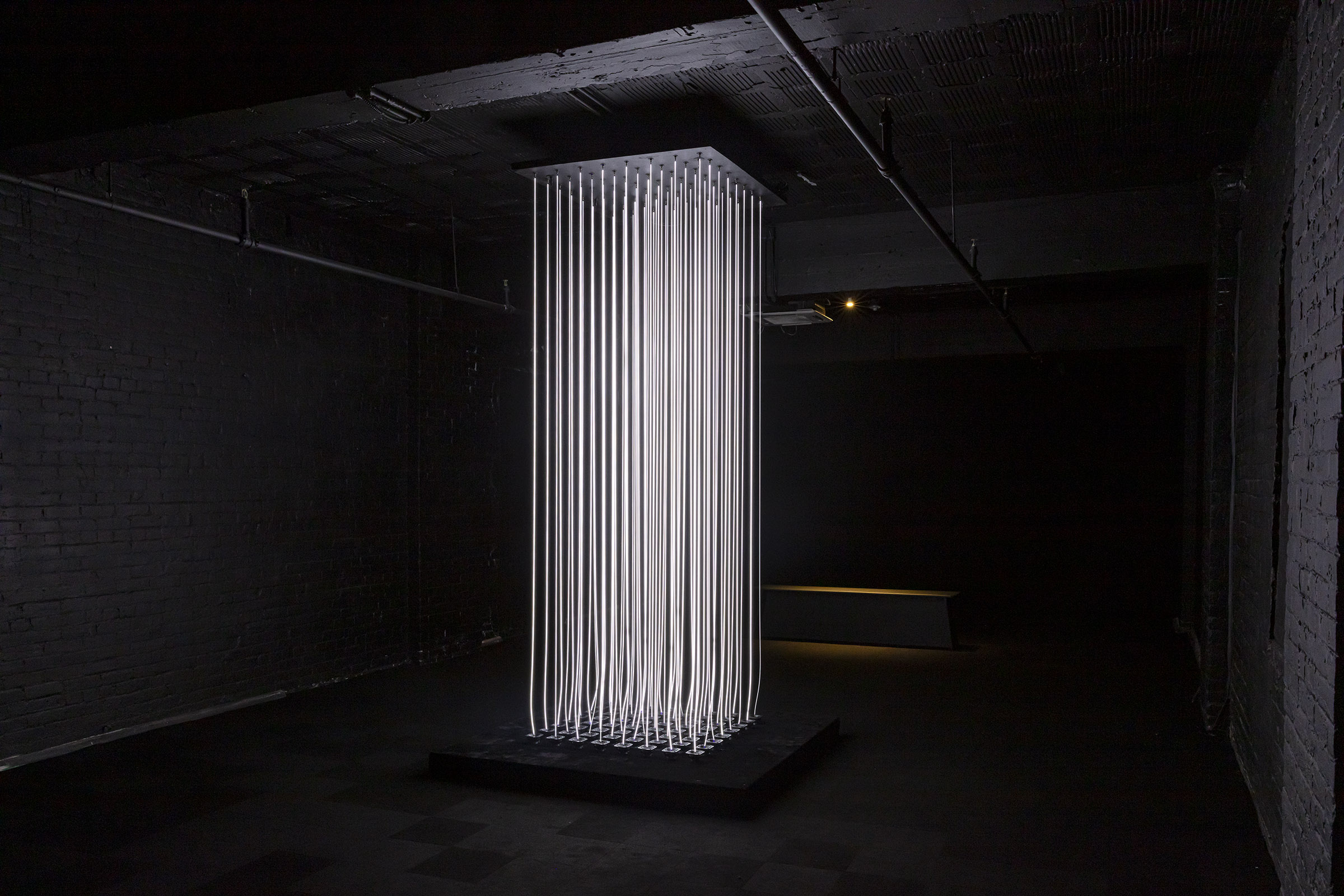
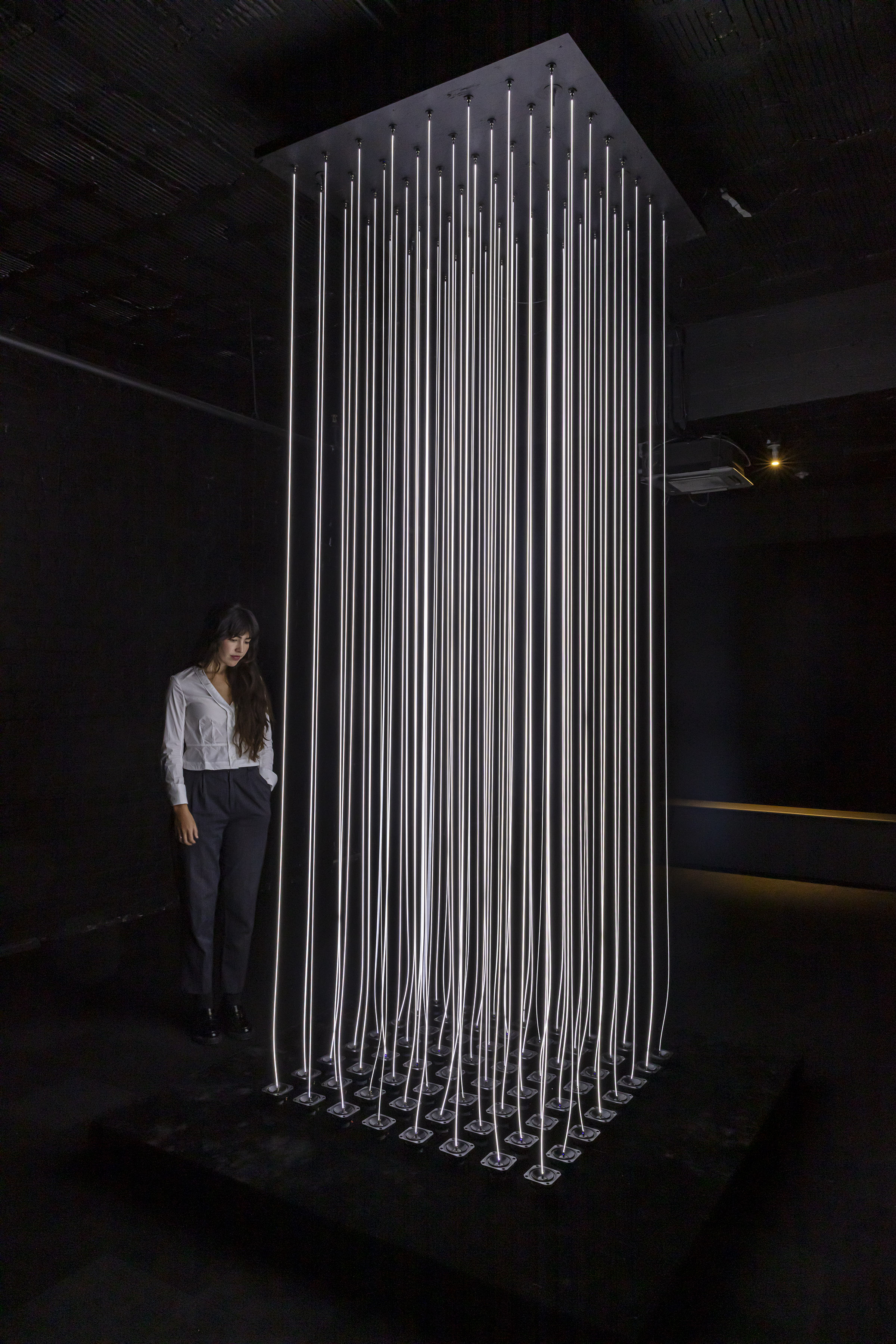
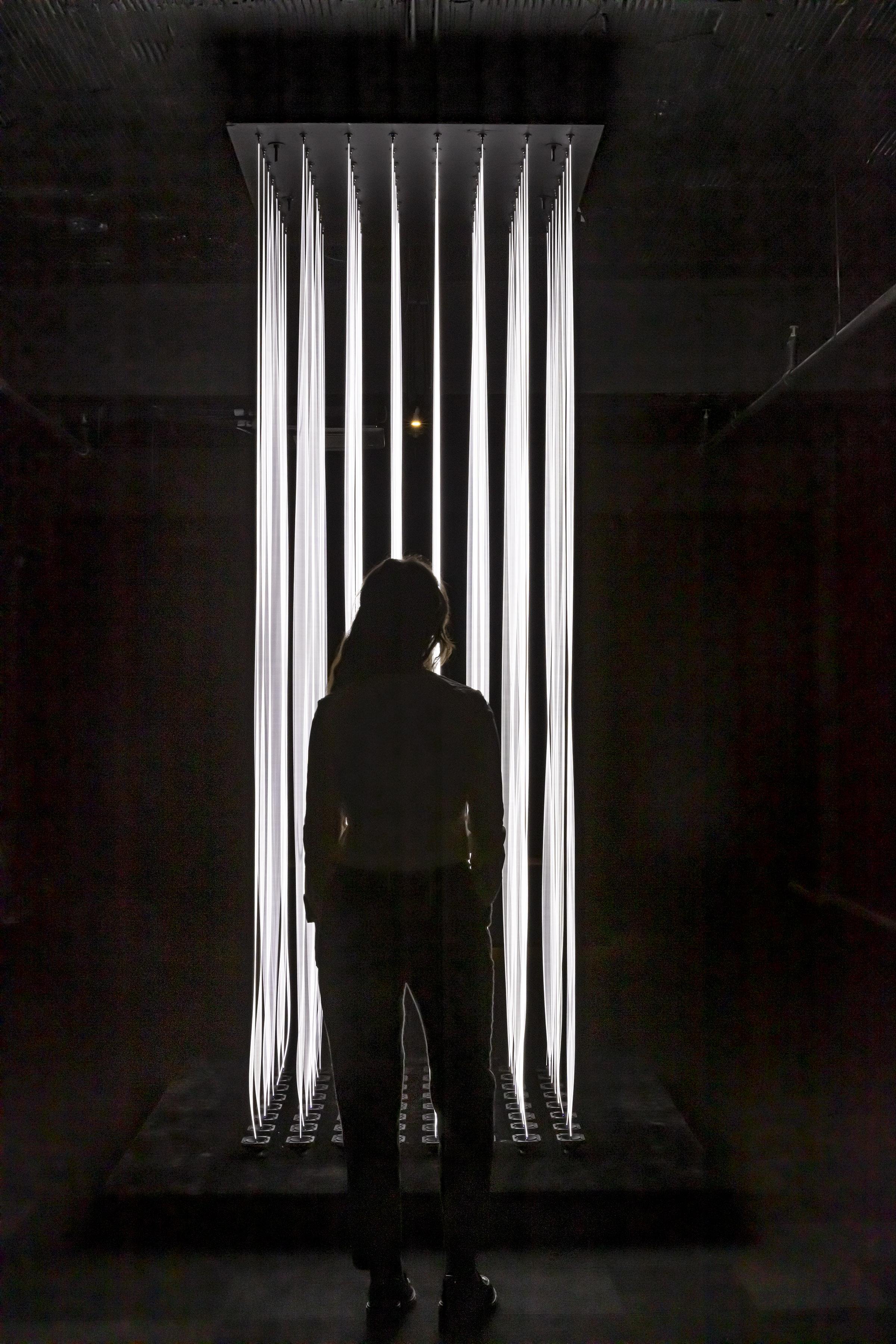
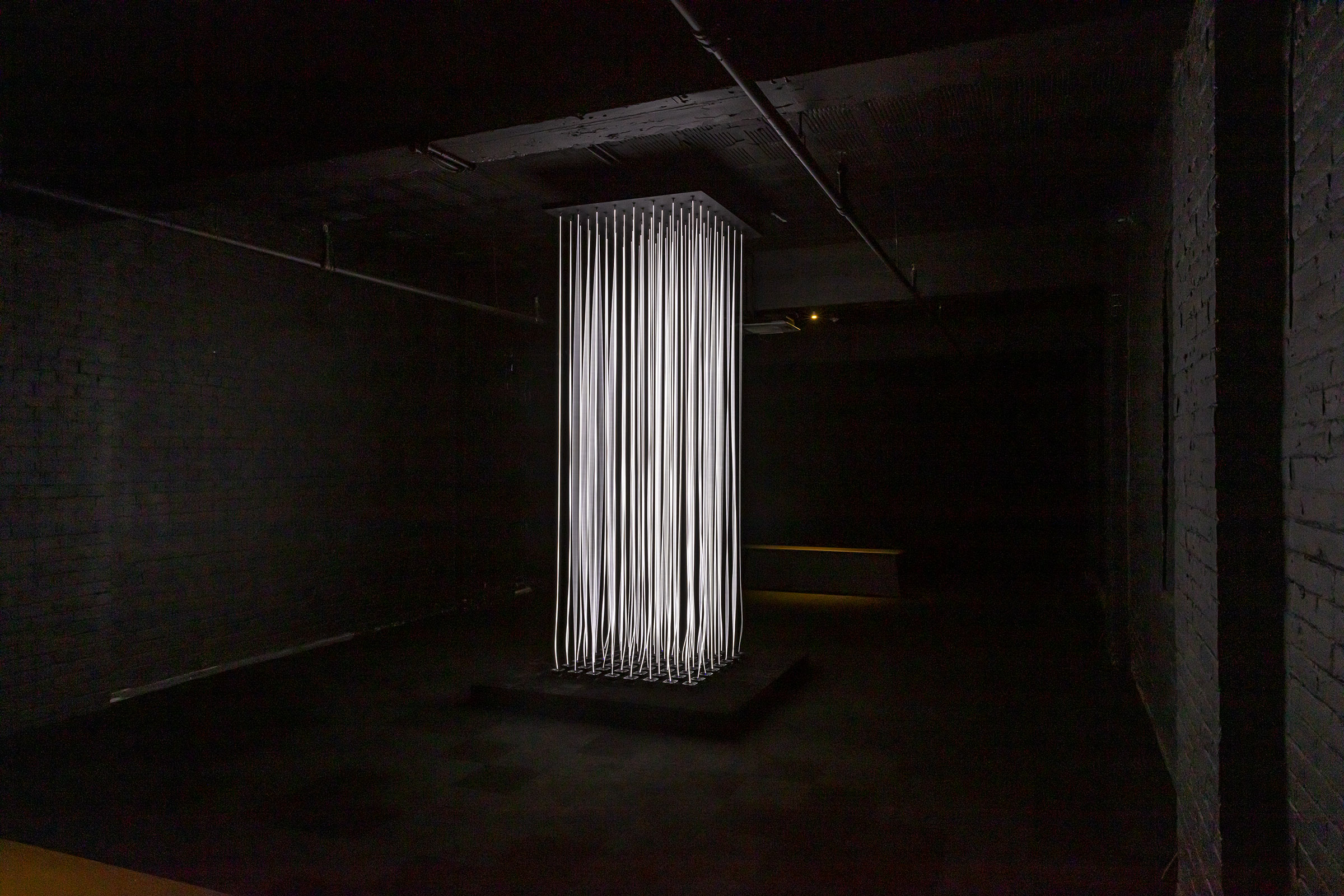
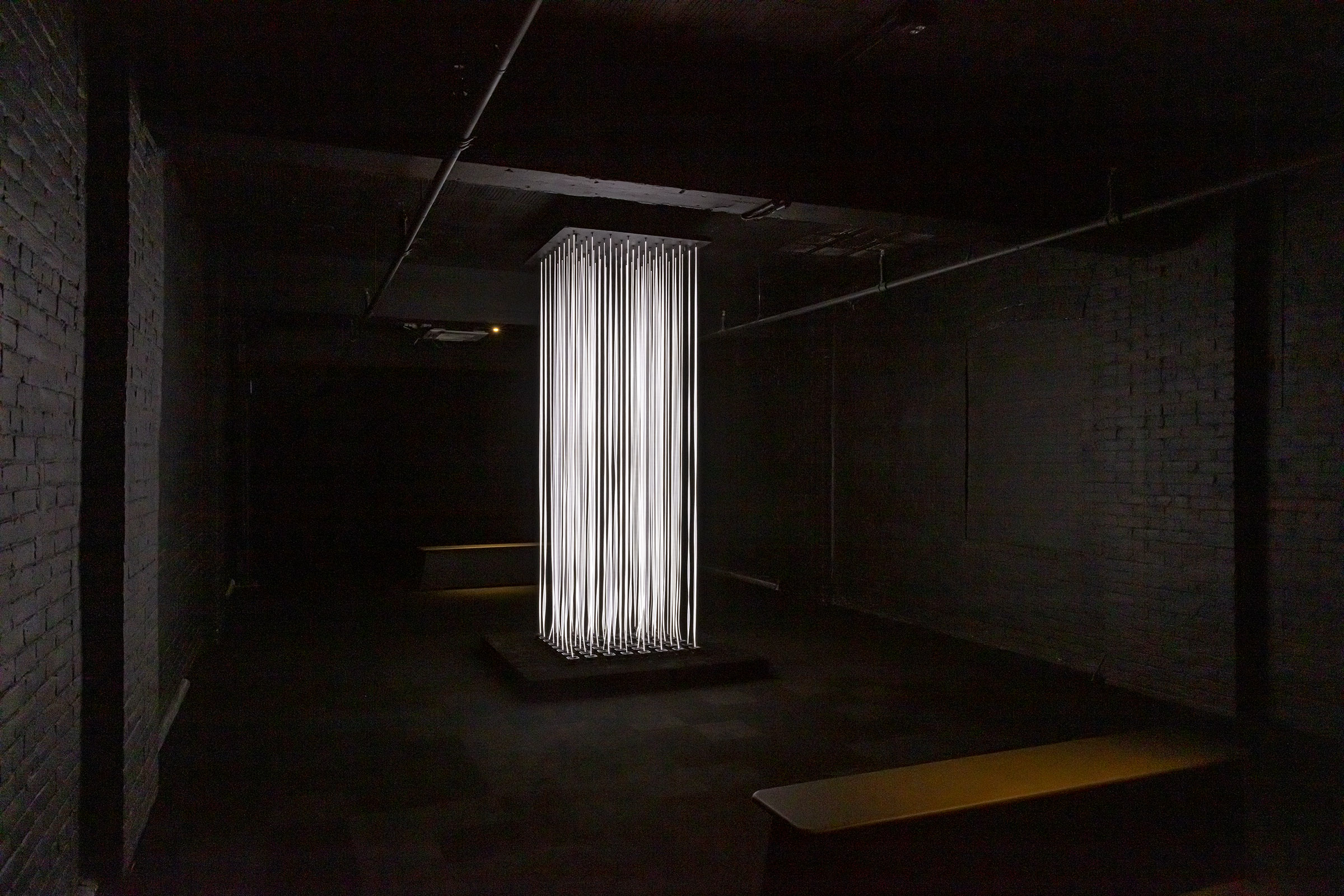
Grounded Frictions. 2025Sculptural Sound Installation
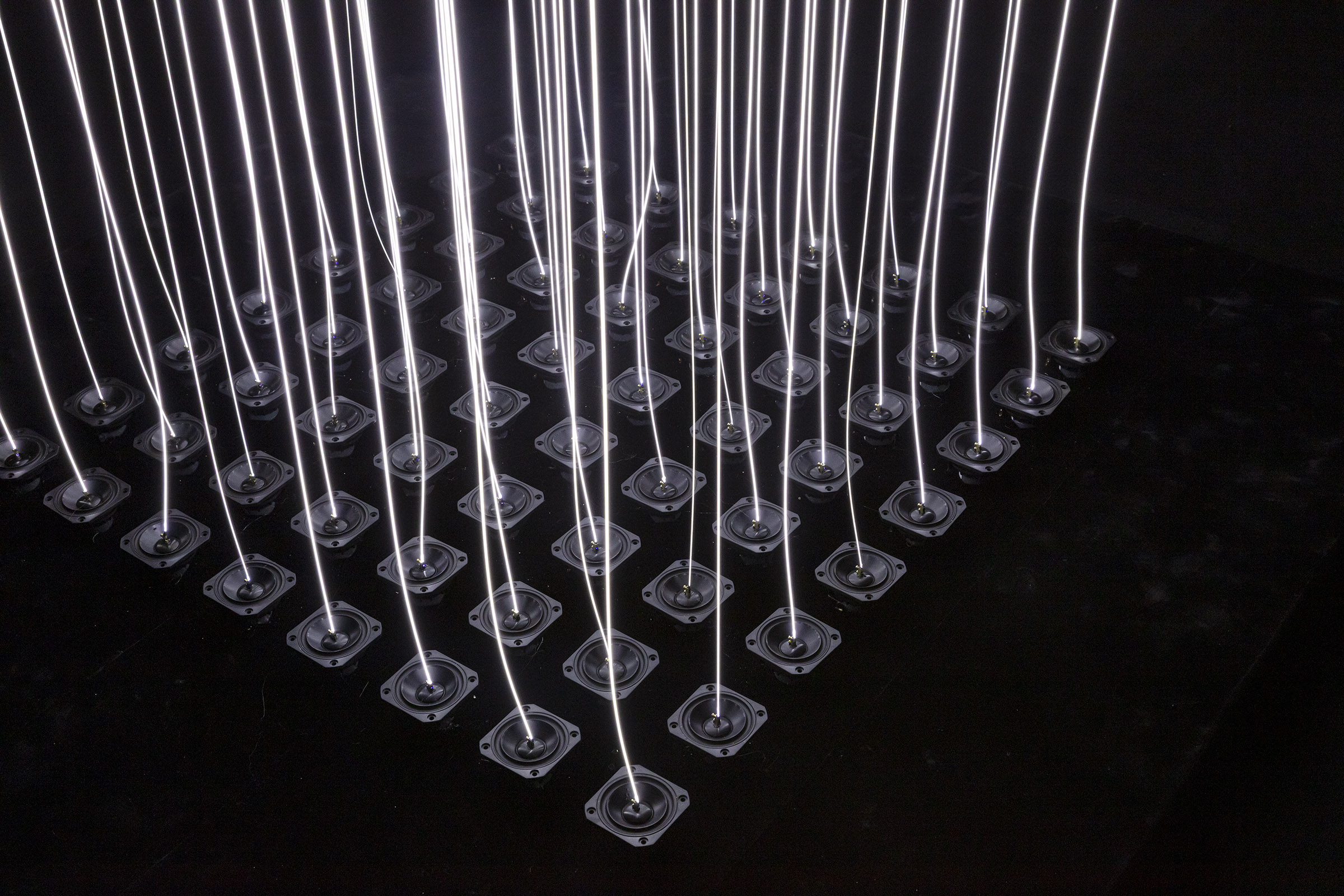
1m × 1m × 3,5m. 64-channel sound, speaker cones, fiber optics, lasers, custom PCBs, aluminium, steel, custom software.
Grounded Frictions emerges from an act of listening to the depths of the Earth. Using geophones, Vilanova recorded the infrasound that propagates underground, including vibrations emitted by gas wells, where extraction destabilises rock formations and threatens subterranean biodiversity.
In a darkened gallery, an array of fiber optic strings stretches from floor to ceiling, each anchored to a speaker. Unable to reproduce audible tones, the threads tighten and quiver in response to the recordings. Light flickers and dims as it traces a choreography of tension and release. Visitors are invited to walk around or sit within the space, encountering vibrational forces across elusive temporal and perceptual scales.
In Grounded Frictions, these earthly vibrations may be felt before they become intelligible. The work explores the ways technologies expand and mediate our perception into domains out of reach, and how attuning to these soundscapes might foster environmental awareness. Within these frictions, a more-than-human sensorium takes form.Credits:
Commissioned by: Mattress Factory
Concept, Design and Construction: Marc Vilanova
Production and Curation: Danny Bracken
Construction Collaborators: Natalie Miczikus, Max Almedia, Clarisa Esevich
Technical Design: Javi Albo
Software: Alfredo Ardia
Custom Hardware and Firmware: Wesley Lee
Text: Ana Prendes
Support: Institut Ramon Llull, Biennal d’Arts Digitals, Konvent PuntzeroAvailable for booking

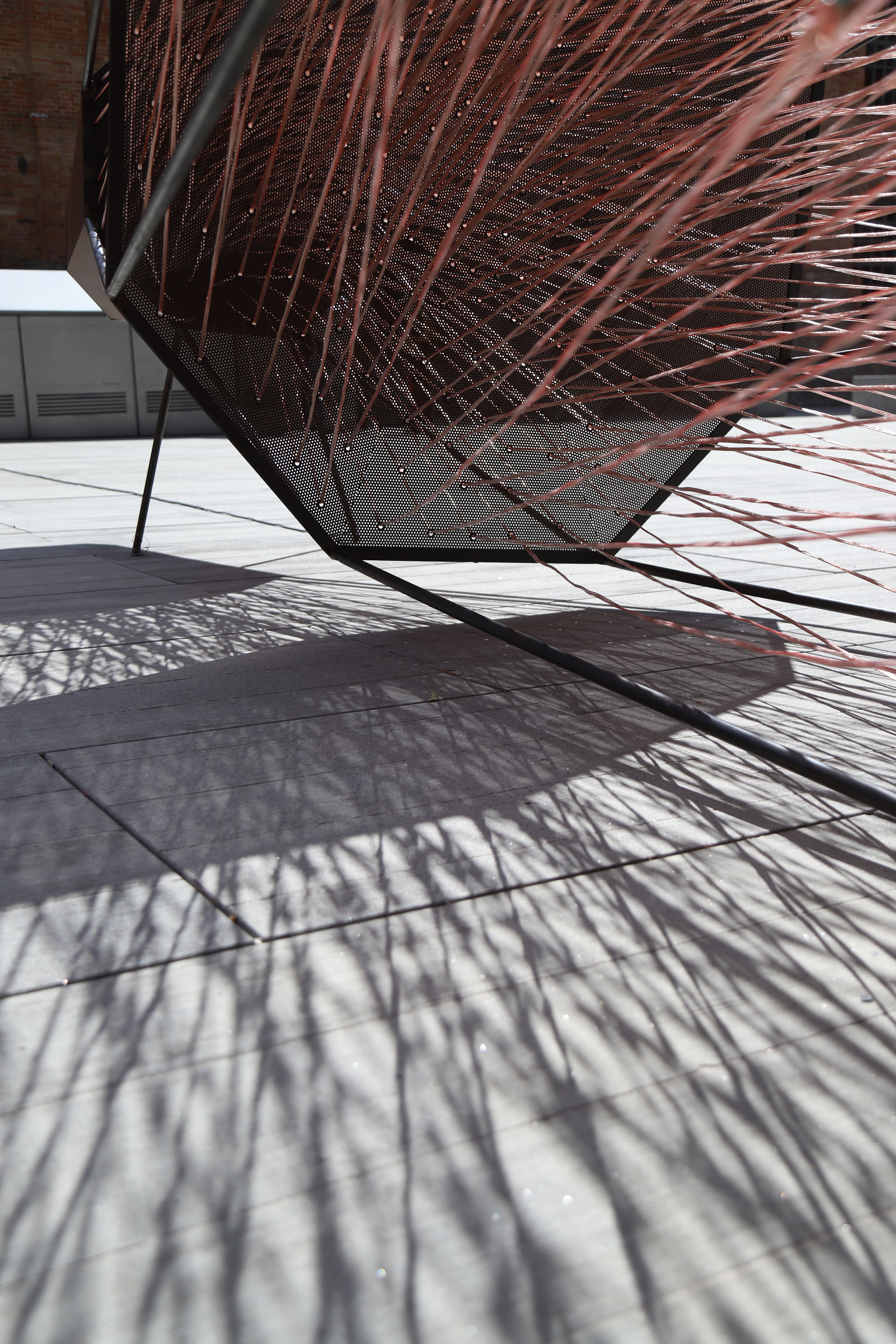
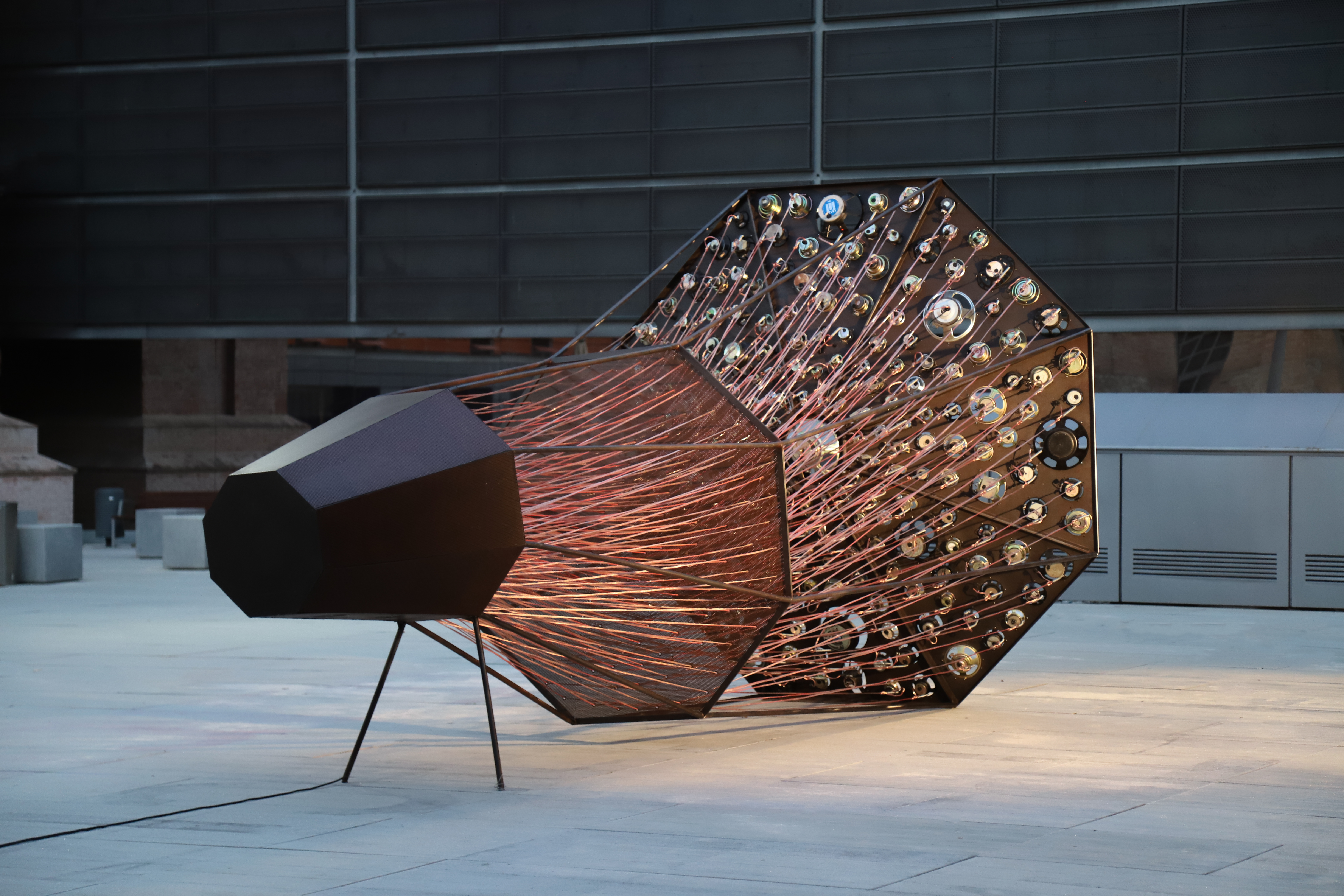


Phonos. 2020-2022
Sculptural Sound Installation
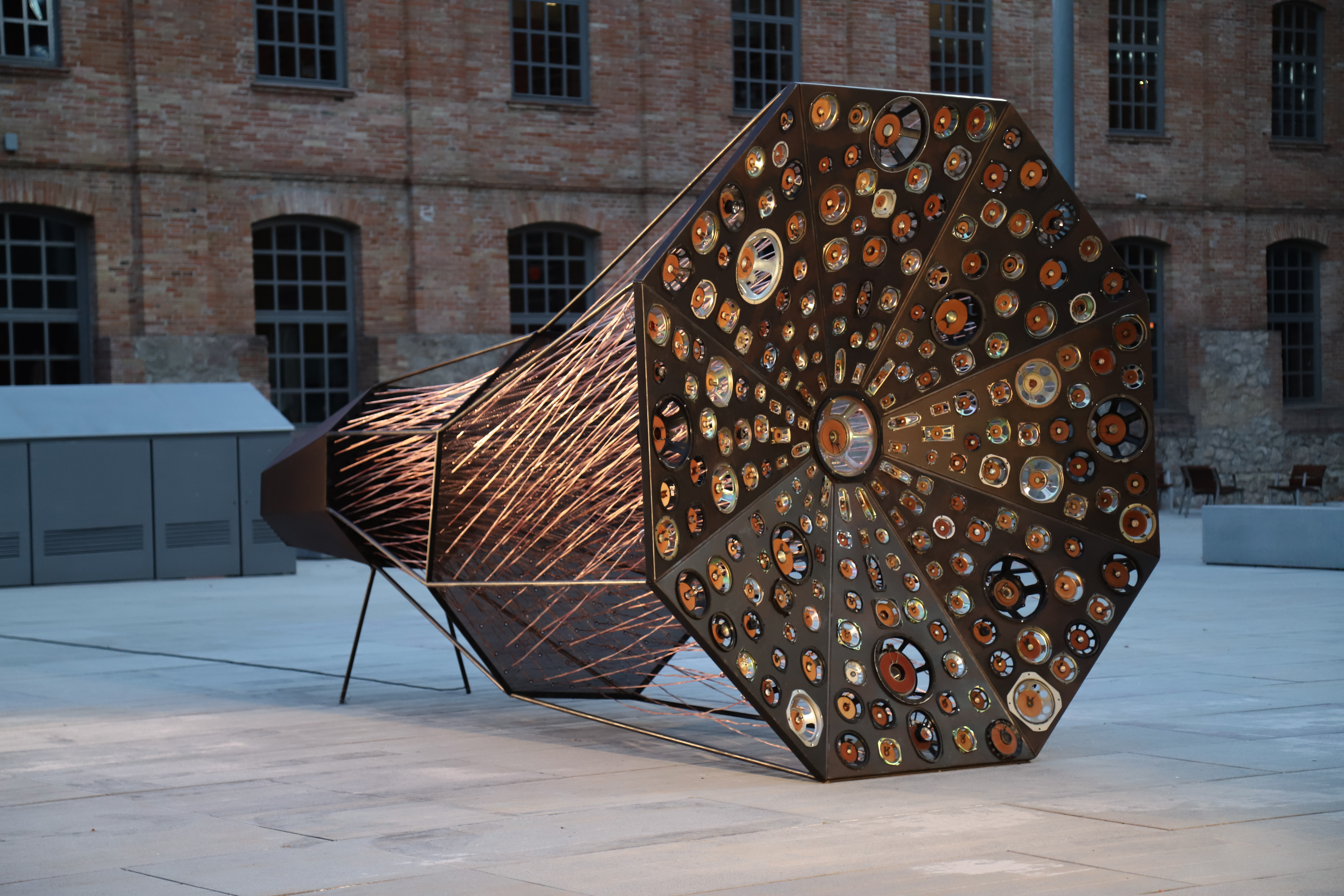
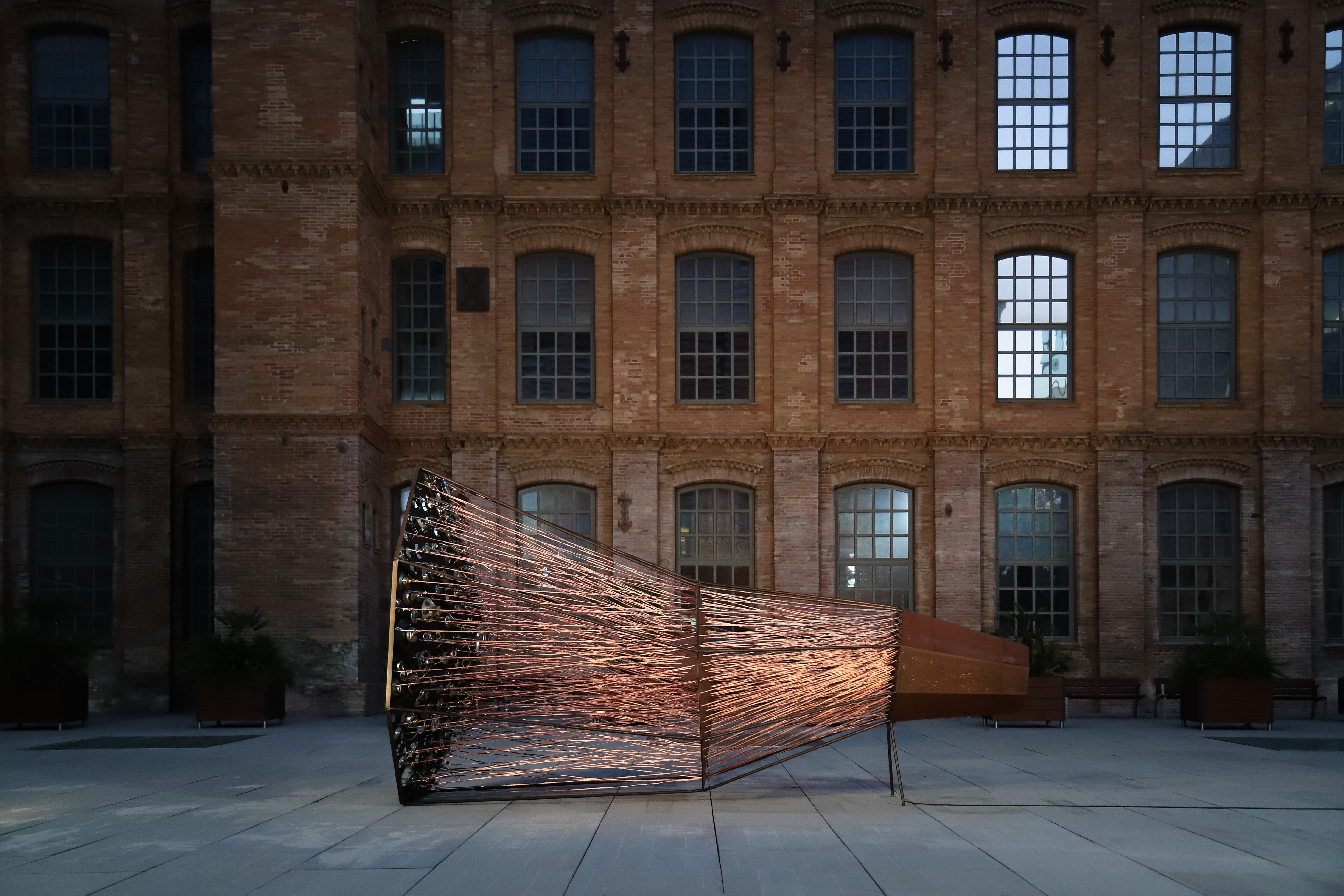
3m x 5m x 3m. 208 channel sound, 208 speaker cones, 104 ampli ers, 26 audio interfaces, audio cables, steel, custom software.
Infrasounds drift beneath the threshold of human hearing. Despite remaining largely unresearched and unregulated, these low-frequency vibrations shape ecosystems and impact the well-being of humans and more-than-humans.
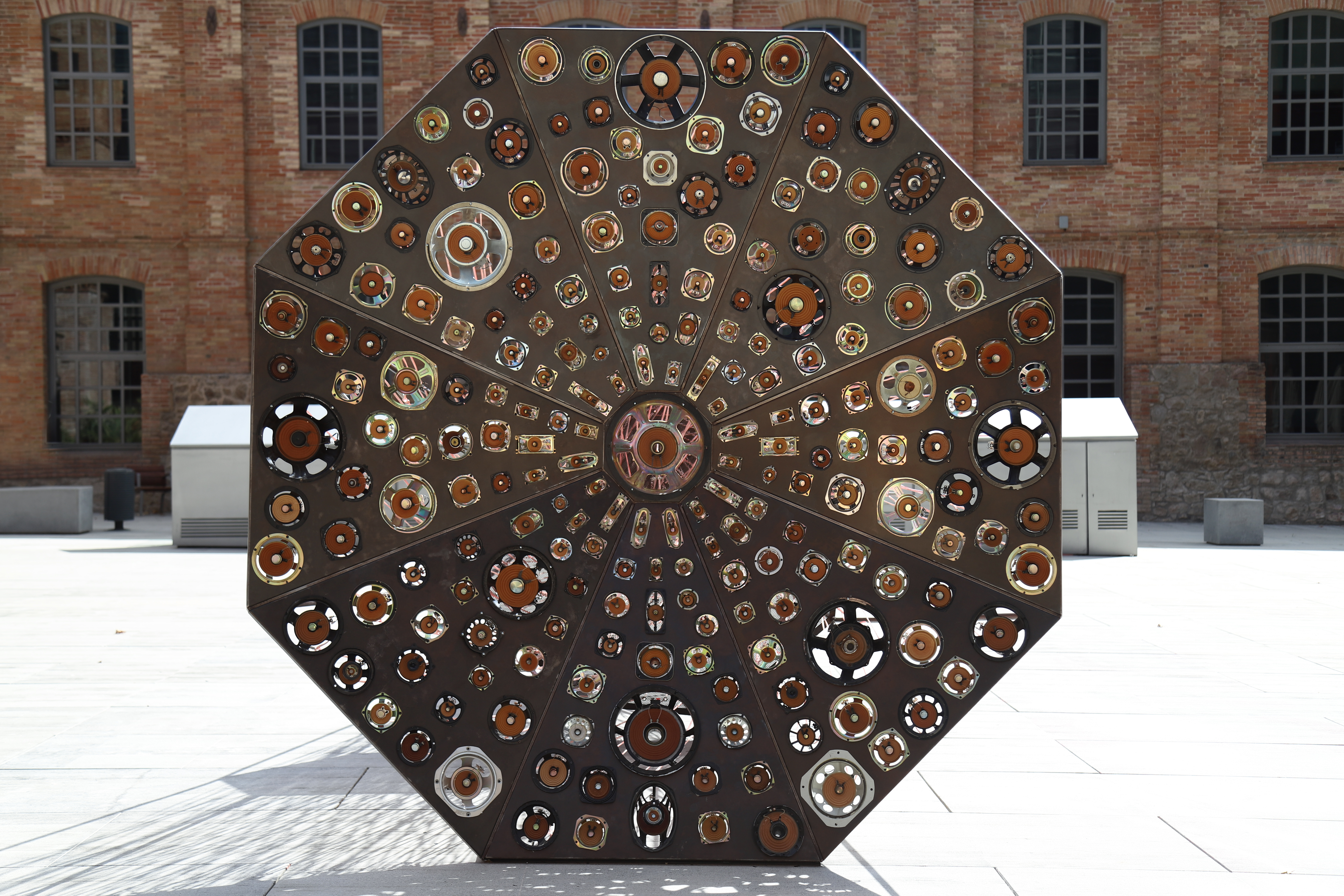
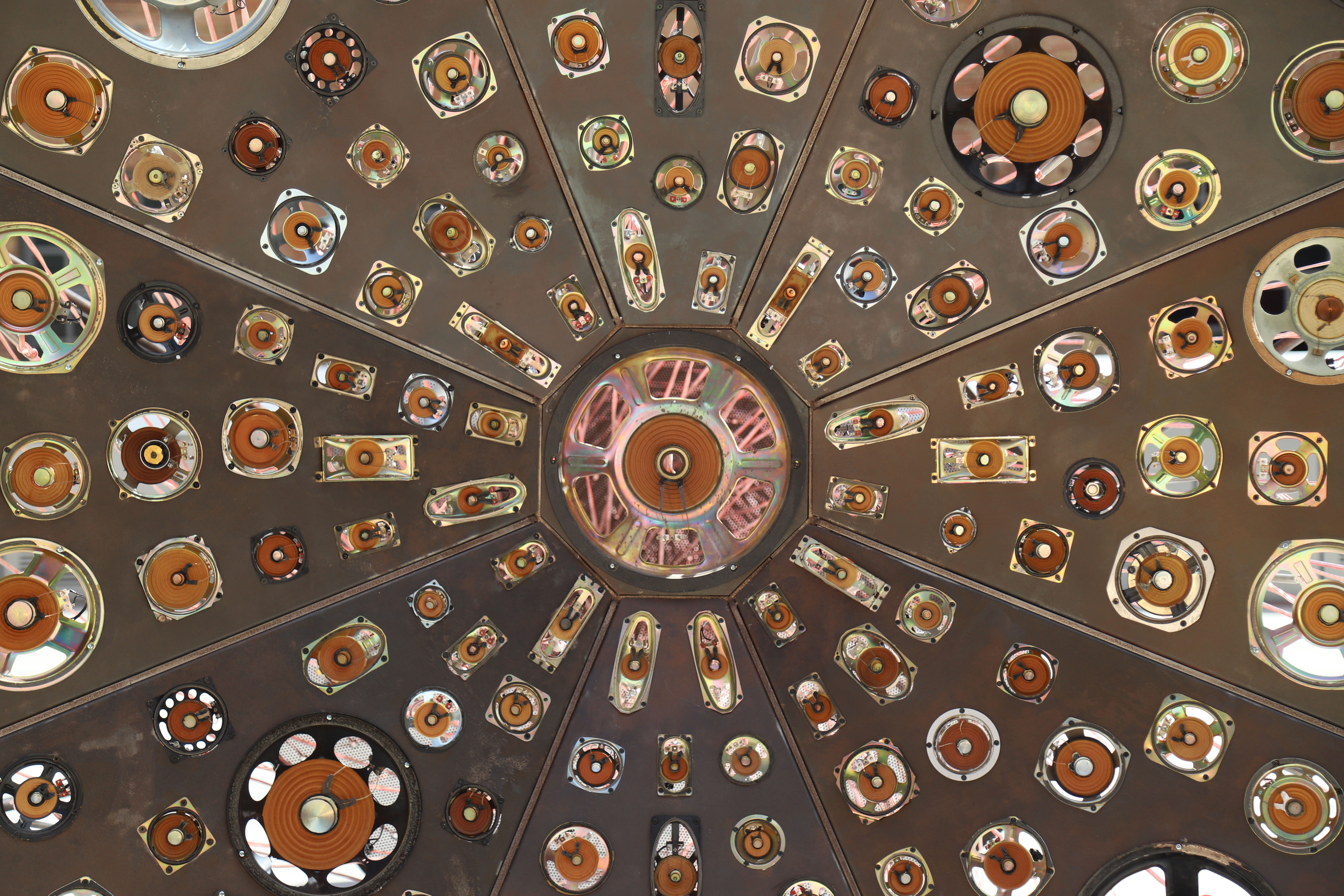
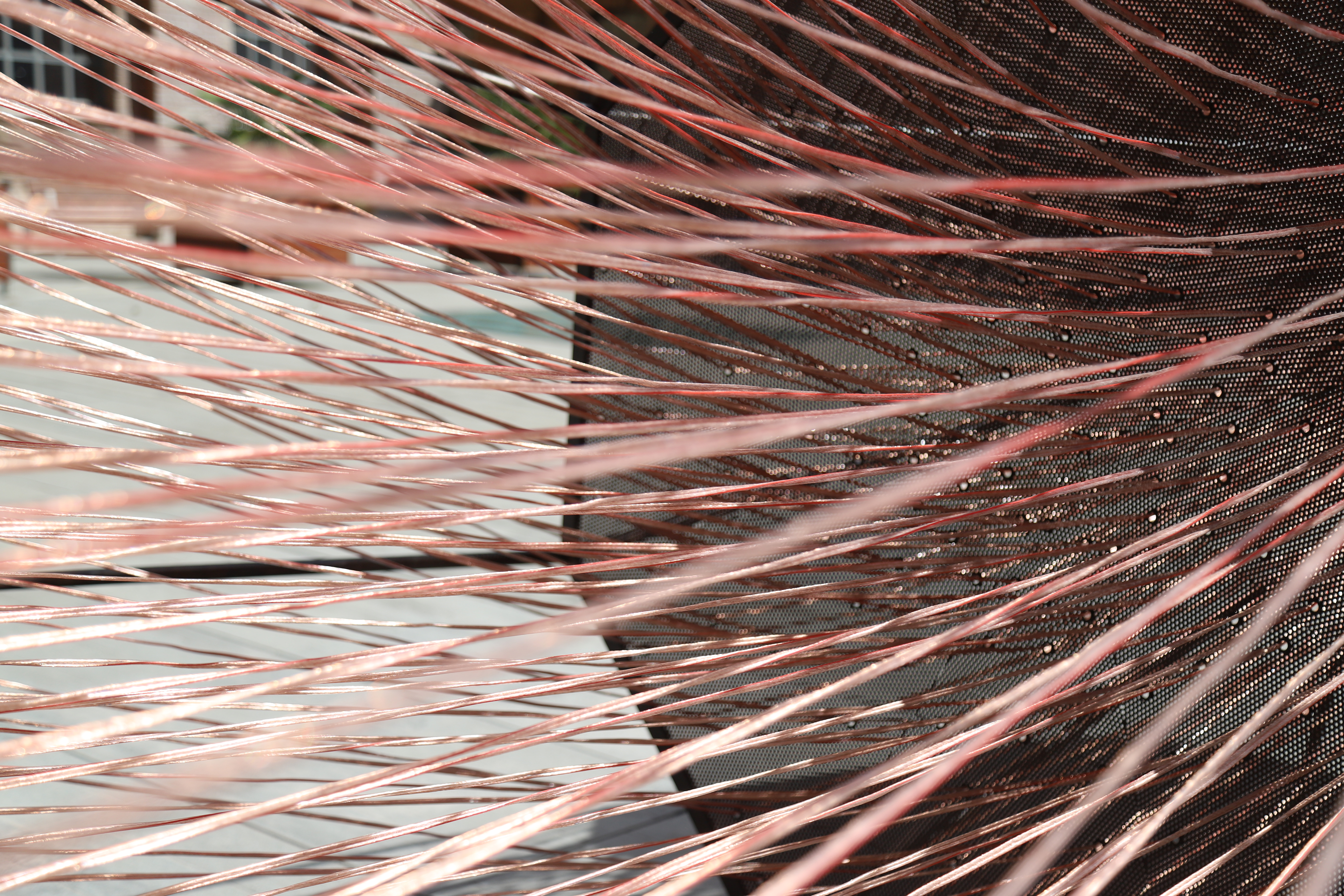
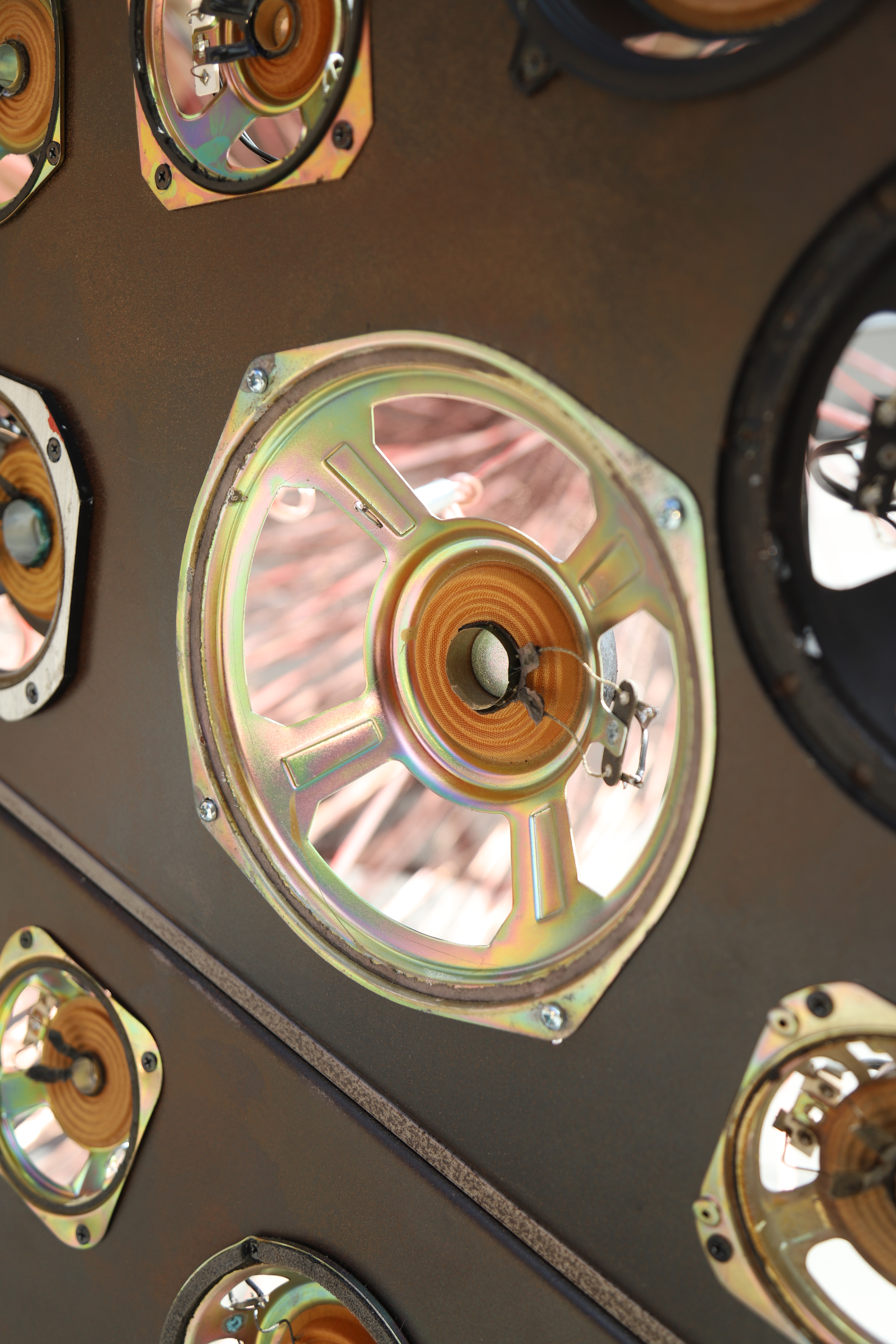
Phonos is a sculptural installation of 208 recycled speakers – each one restored, stripped of its cone, and reprogrammed to receive a unique infrasound. Too small to voice these signals into the air, the speakers reveal their mechanical effort: coils vibrate, membranes ripple in tension and metallic components creak. An algorithm modelled on collective animal behaviour sequences their movements into an ever-changing polyrhythm of tremors and buzzes.
Despite its monumental scale, Phonos invites closeness. The sculpture becomes a living organism that breathes and pulsates, creating an intimate, shared experience to attune to imperceptible acoustic ecologies. Through embodied listening, Phonos offers a space to relate to and care for the sonic worlds that hold us.
Credits:
Commission: Fundació Phonos
Idea | Production | Design | Construction: Marc Vilanova
Structure designed and created in collaboration with: 2monos
Metal Work: Alejandro Dumon, Ivan Mena
Hardware and Software: Alfredo Ardia
Installation Support: Venus Villa, Mateu Targa, Joan Perramon, Júlia Faura
Help: Giovanna Langone, Arantxa Boyero, Llorenç Balaguer, Joan Manel Pérez, David Chia, Gil Roca, Marc Ramis, Montse López, Berenice Moran, Caro Palmeiro, Alexis Castellano, Fernando Garcia-Valiño, Alejandra Andrés, Pedro Ramoneda, Teresa Pelinski, Lucas Elías, Joaquín Molina, Matías Tolchinsky, Jakov Habjan
Special Thanks: Jordi Alomar, Ángel Faraldo, Universitat Pompeu Fabra, Carles Pons, Lluís Campos, Anna Benet, Mar Medinyà, Iris Yirei Hu, Philippe Dumon, Nicoletta Mantoan, Família Vilanova Pinyol, Can Timoner, Konvent Puntzero
Support: Fundació Phonos, OSIC, Fabra i Coats, Casal Solleric, Museu de la Música, Auditori de Barcelona, Institut Ramón Llull
Photos: Anna Benet
Available for booking



Limen. 2019
Sound/Light Installation
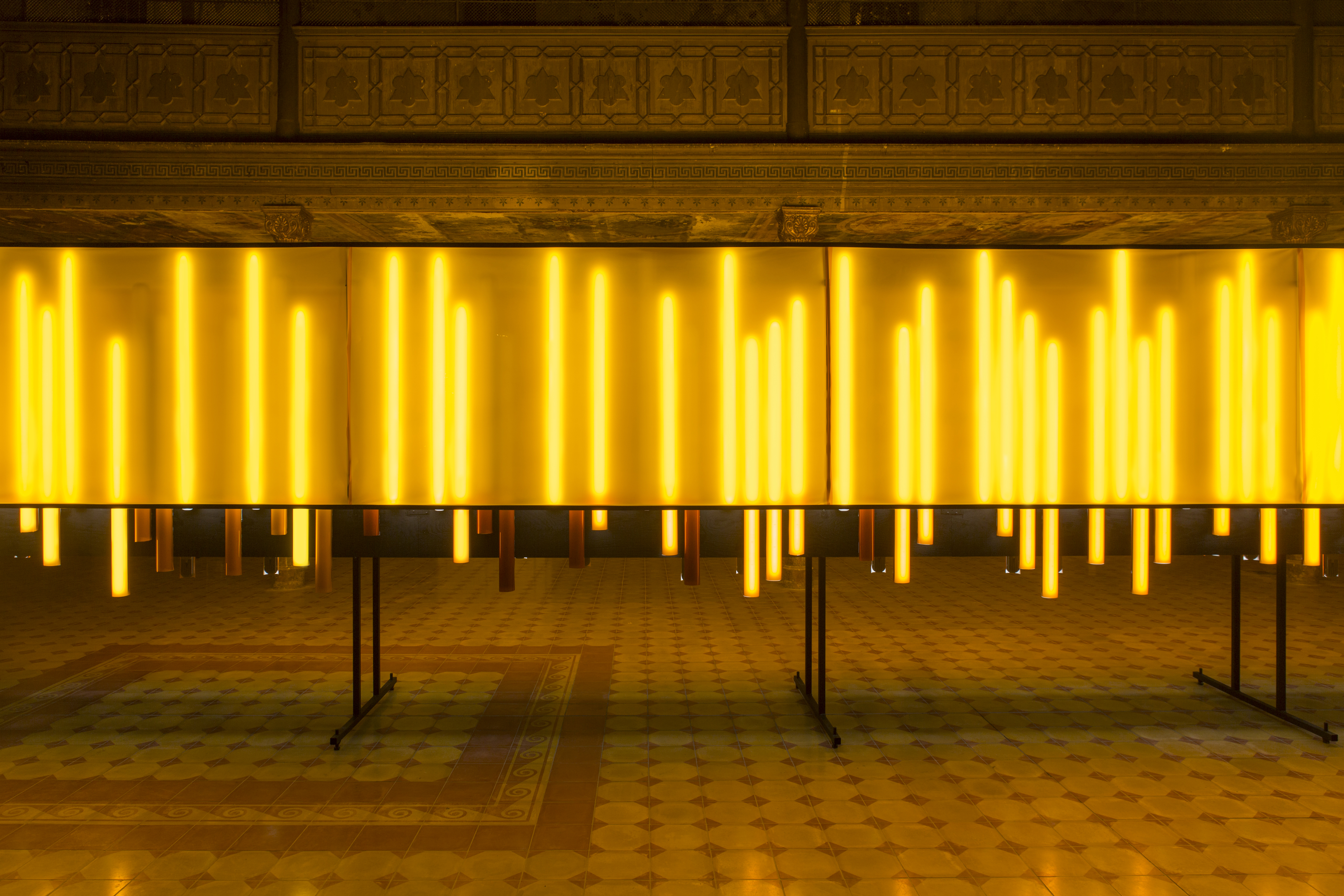
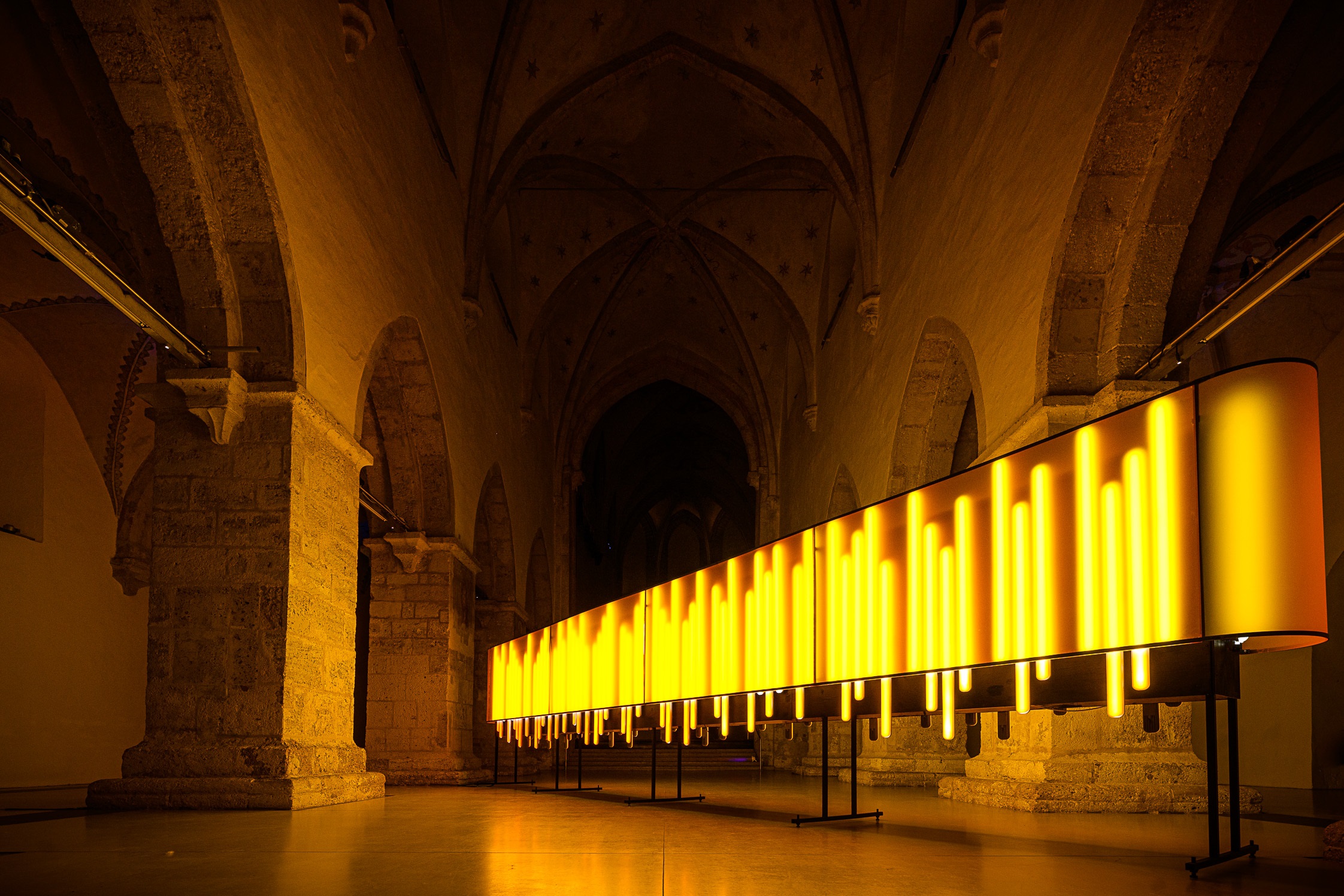
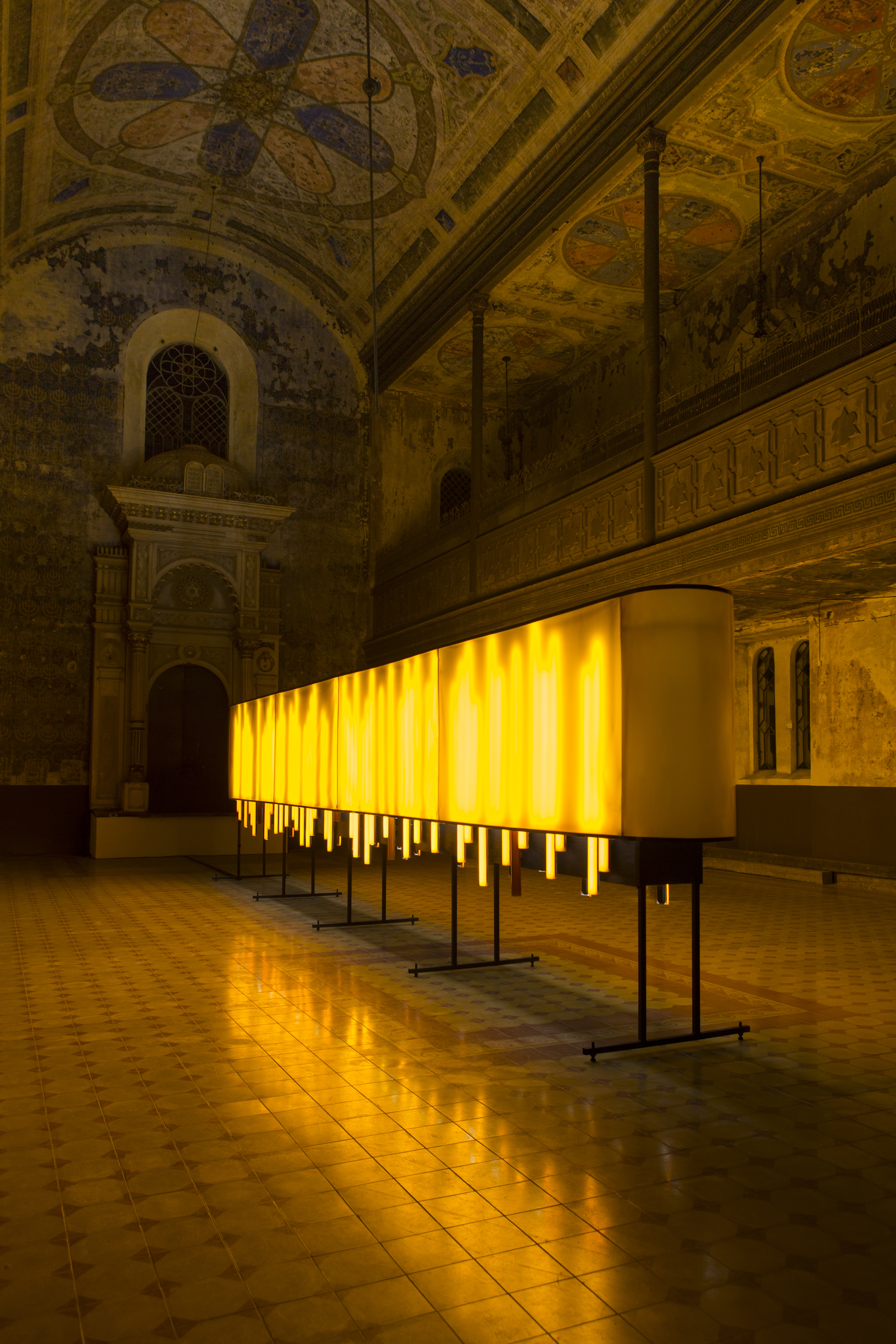
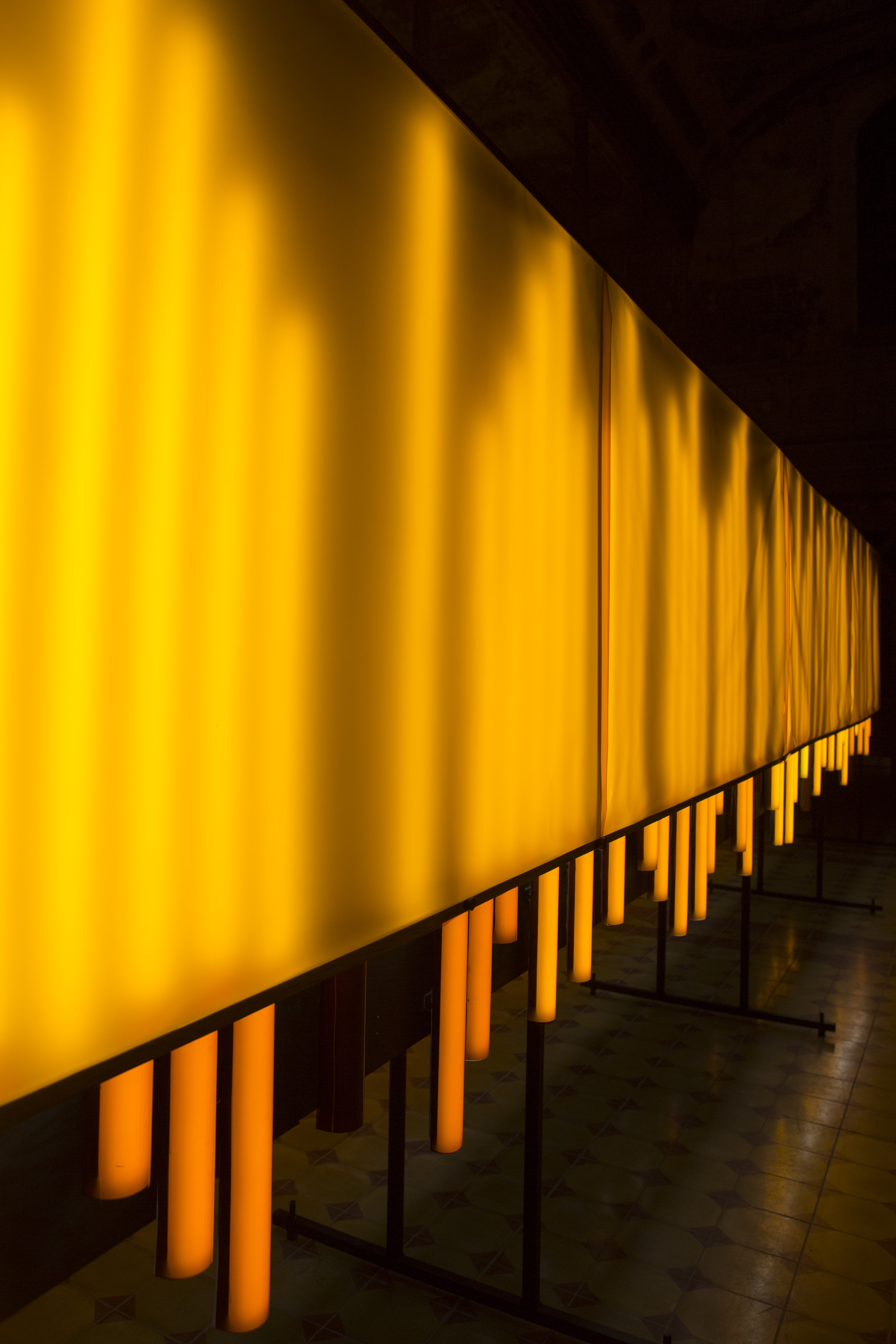
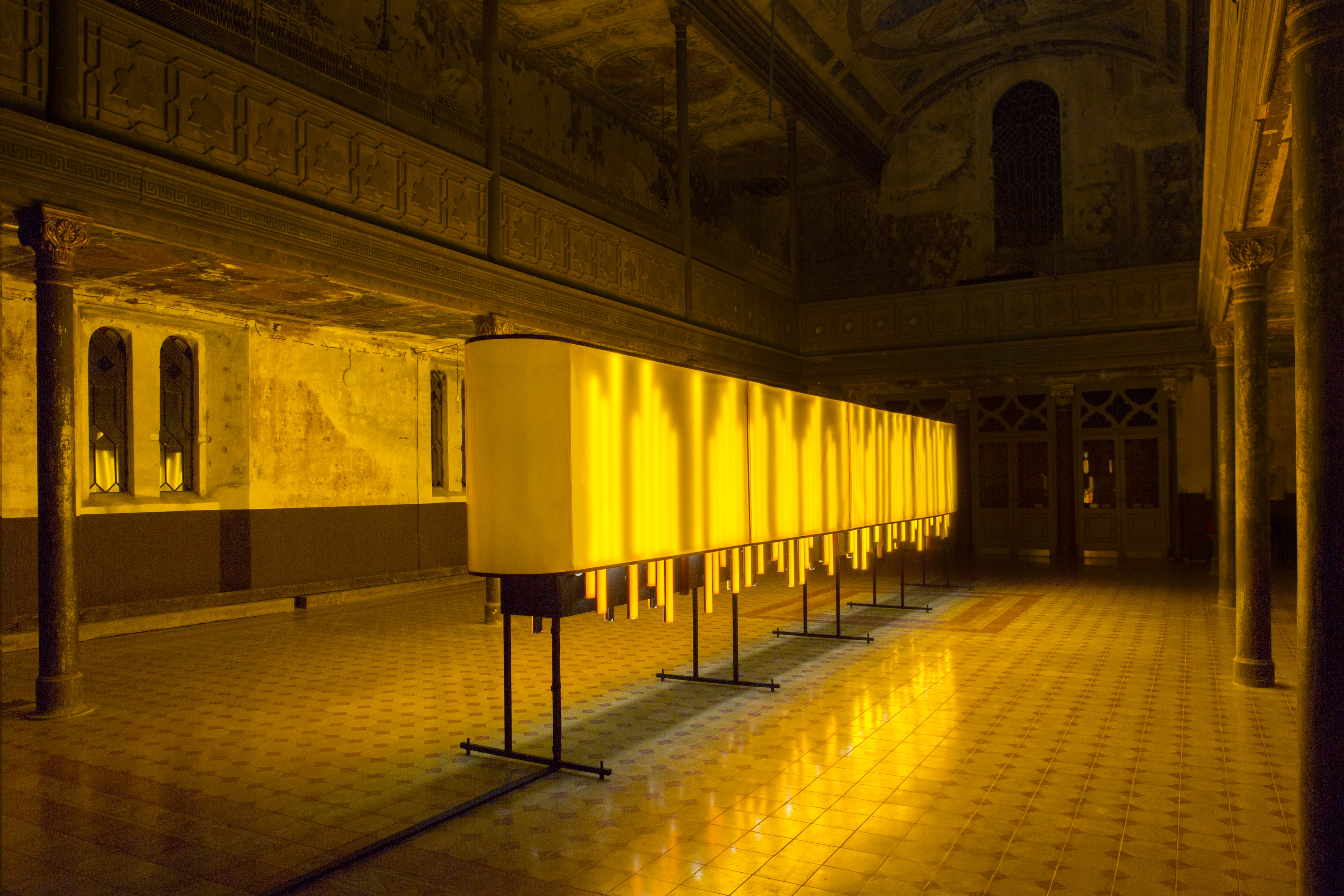
10m x 0,6m x 2m. 4 channel sound, 128 LED fluorescent lamps, dmx relays, wood, steel, polymethyl methacrylate, custom software.
Limen begins with an exploration of the fluorescent light tube. This industrial, workaday lamp emits frequencies above 20 kHz, which lie beyond the threshold of human hearing. These extremely high-pitched sounds were recorded with specialsied ultrasounds detectors and transformed into an audible composition built, which will remain imperceptible otherwise.
128 fluorescent tubes are arranged in a linear structure based on the waveform of the ultrasonic emissions, dividing the space in two. As the composition fills the room, in turn, their sonic presence triggers a delicate light sequence: darkness alternates to intermittent, intense bursts that displace across the structure. Together, the tubes form a yellow field that spills beyond their boundaries into the surrounding architecture. Through an accumulative and collective experience of light and sound, they shift between object and phenomenon, between their material presence and optical effects.
Credits
Commission: Art & Tech Days
Produced by: Creative Industry Košice
Co-producer: Klangraum Krems
Residency Hosts: KAIR Košice Artist in Residence, Artist in Residence Niederösterreich
Idea, Sound, Design, Software: Marc Vilanova
Production: Tatiana Takáčová, Ivana Rusnáková, Paula Haslinger
Studio Assistant: Rebeca Urízar
Installation Support: Gabriel Podolinský
Software Support: Alfredo Ardia
Text:
Ana Prendes
Special Thanks: Igi Ayedun, Michal Hladky, Petra Houskova, Anna Mária Trávničková, Miroslava Rybarova, Lisi Grand, Klaus Moser, Ernst Steindl and the Minoritenkirche Team.
Camera: Robert Rampacek, Tatiana Takáčová
Edit: Marc Vilanova
Color: Venus Villa
Photos by: Tatiana Takáčová
Available for booking
With the support of:

Cascade. 2023
Sculptural Sound Installation
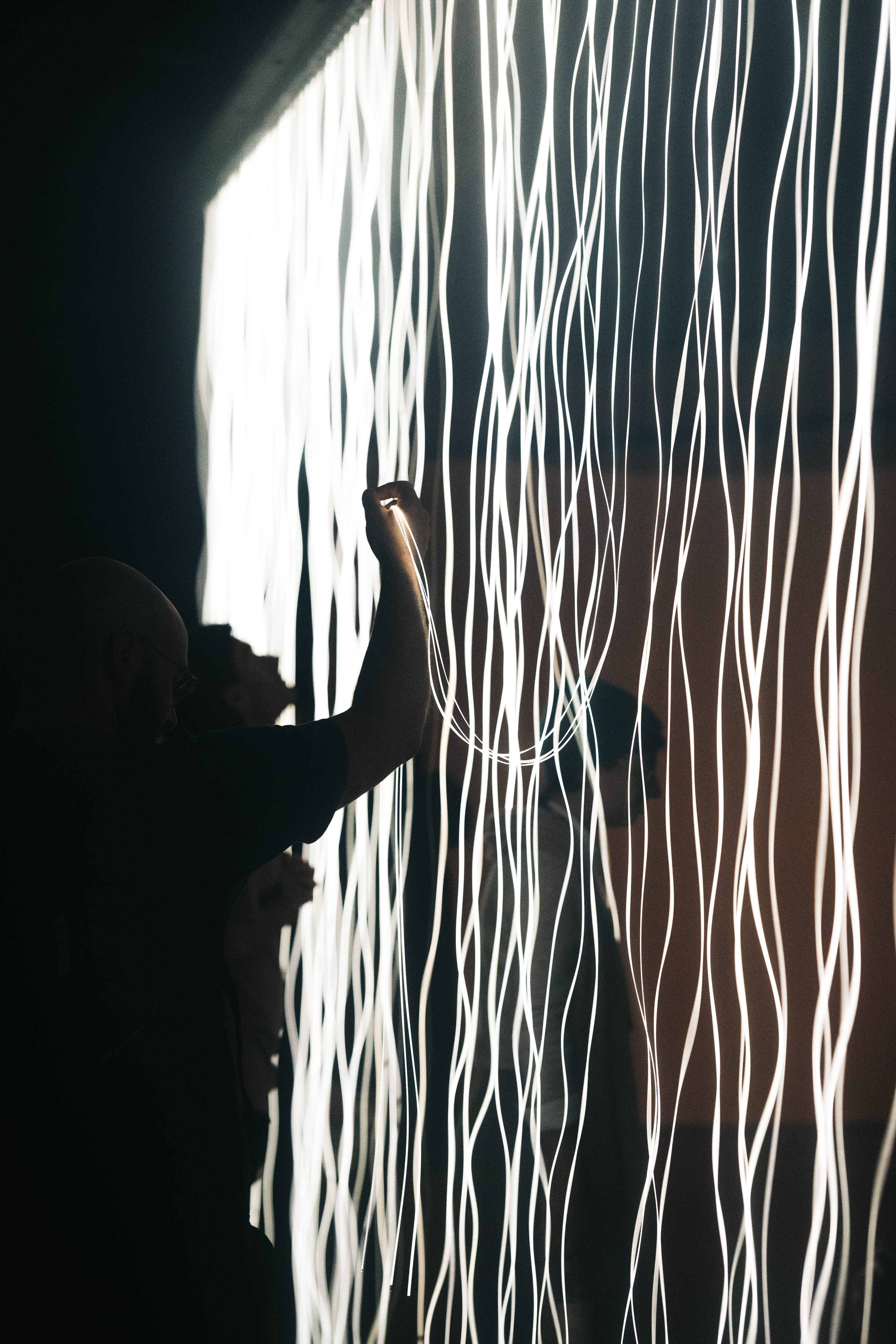
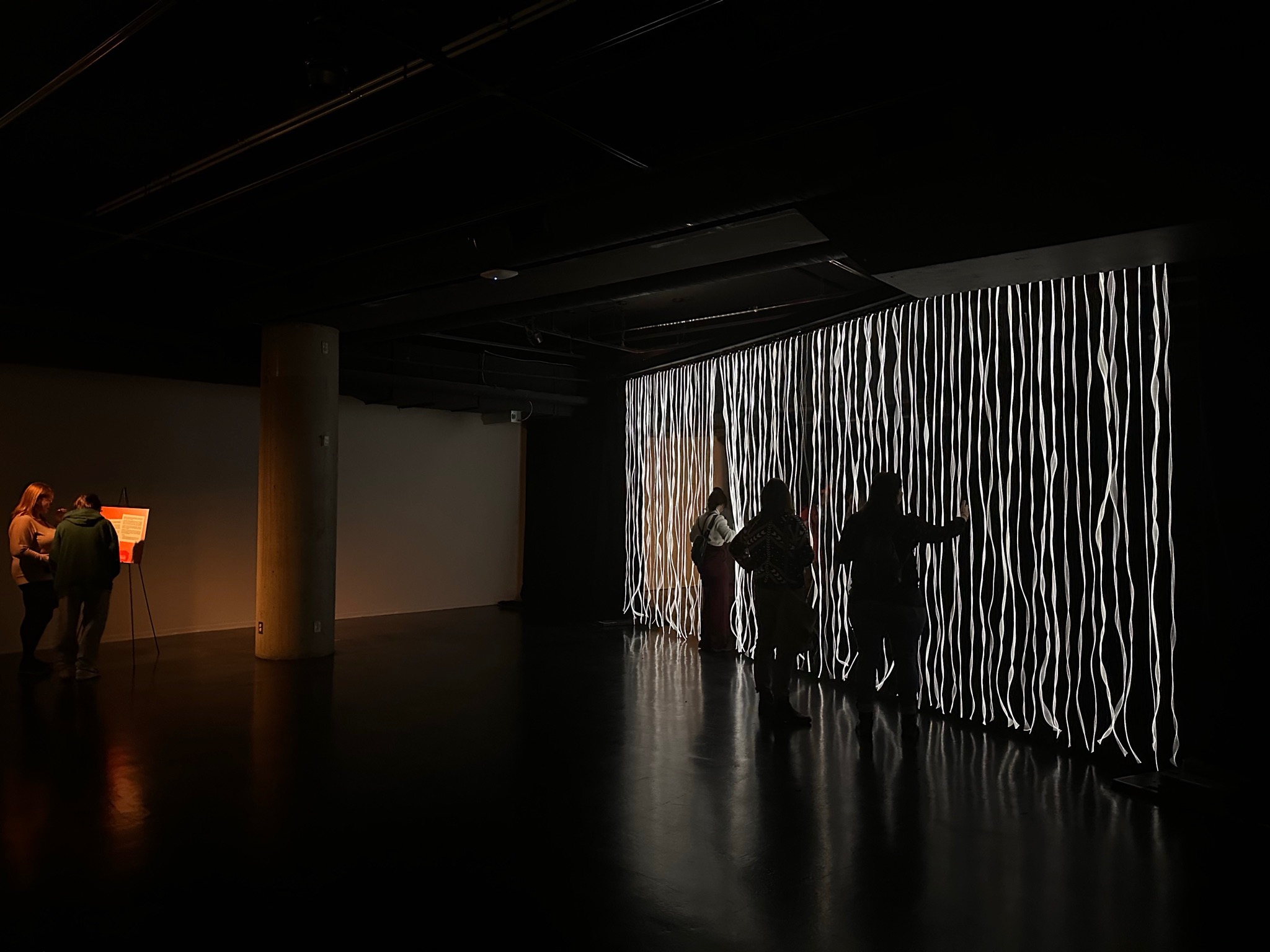
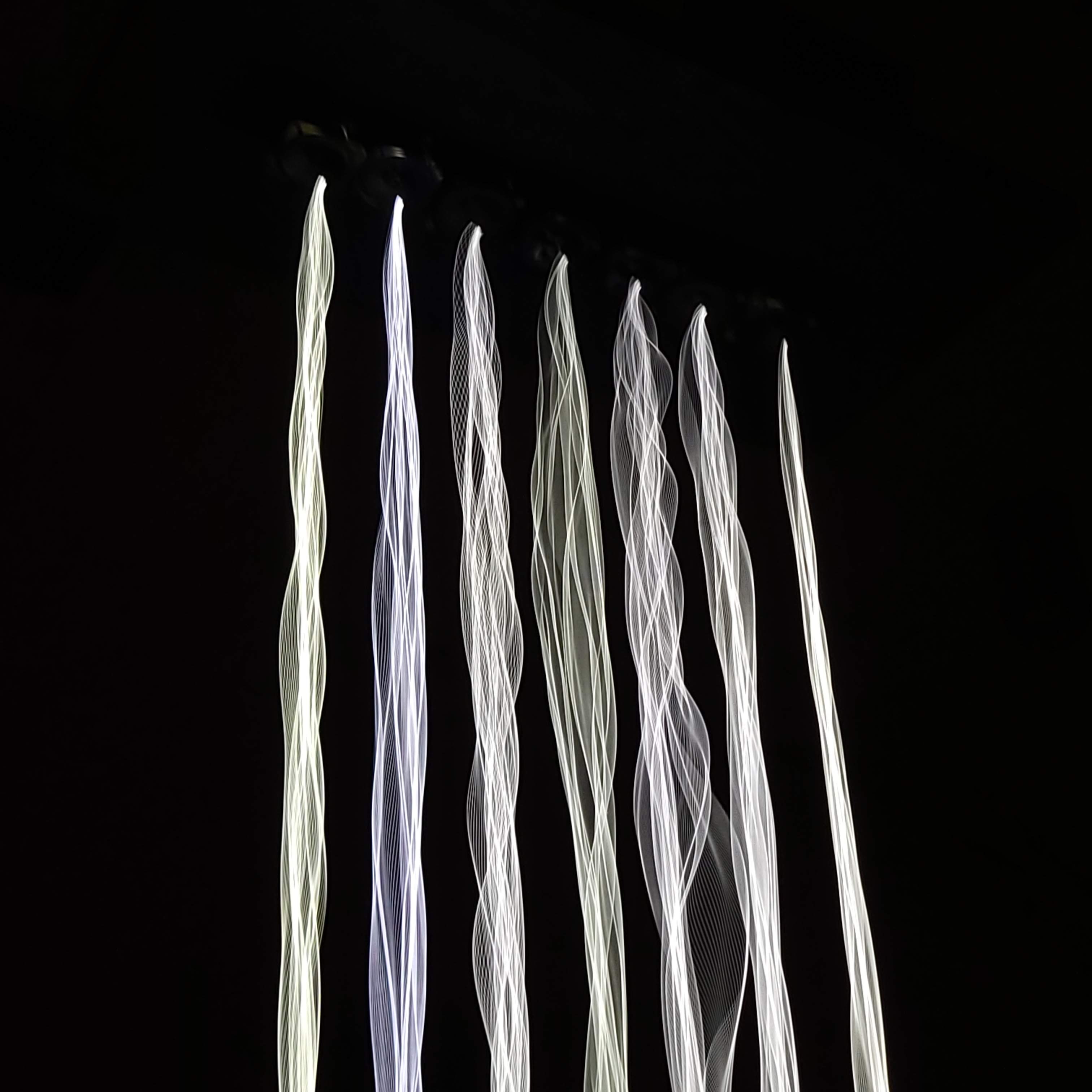
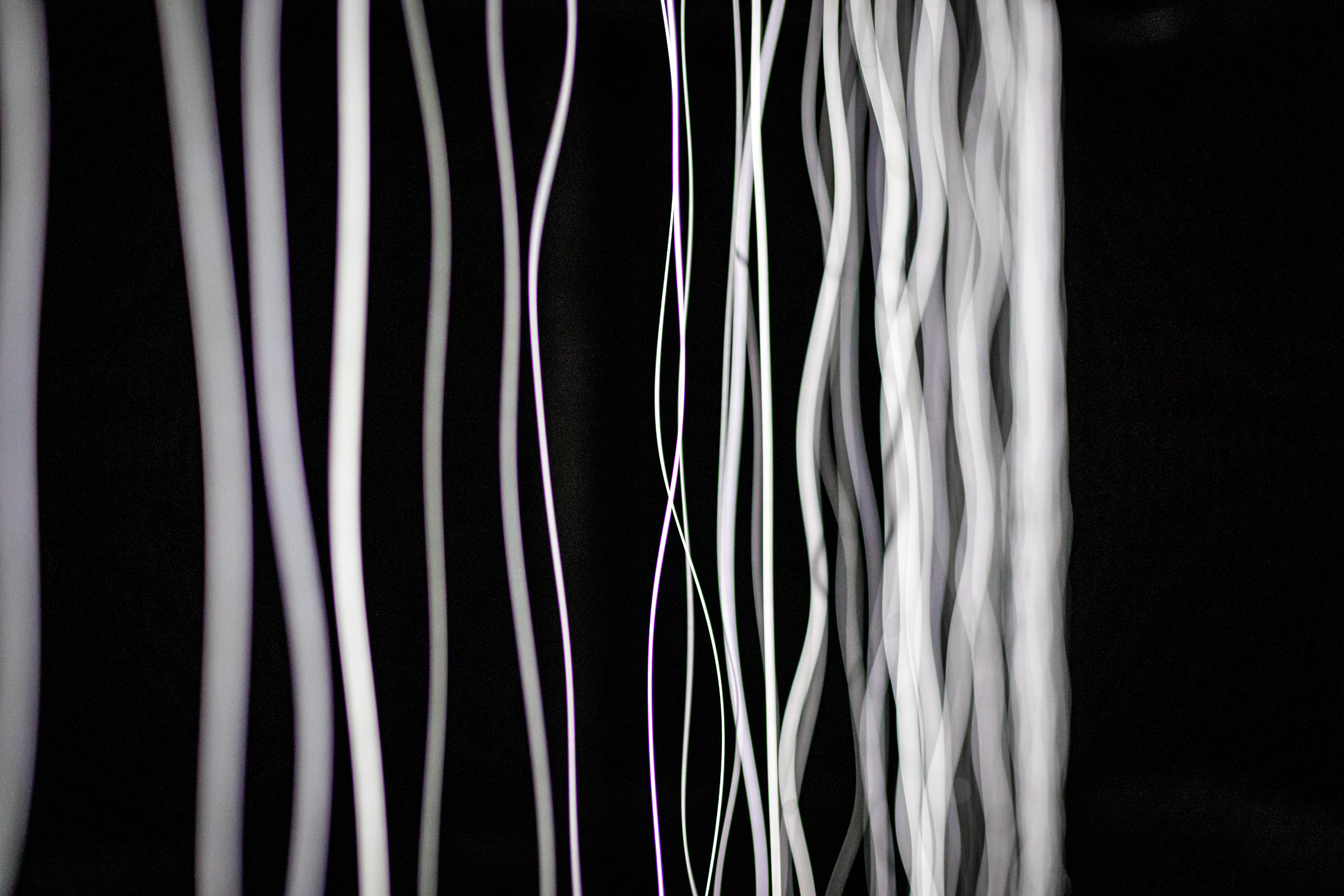
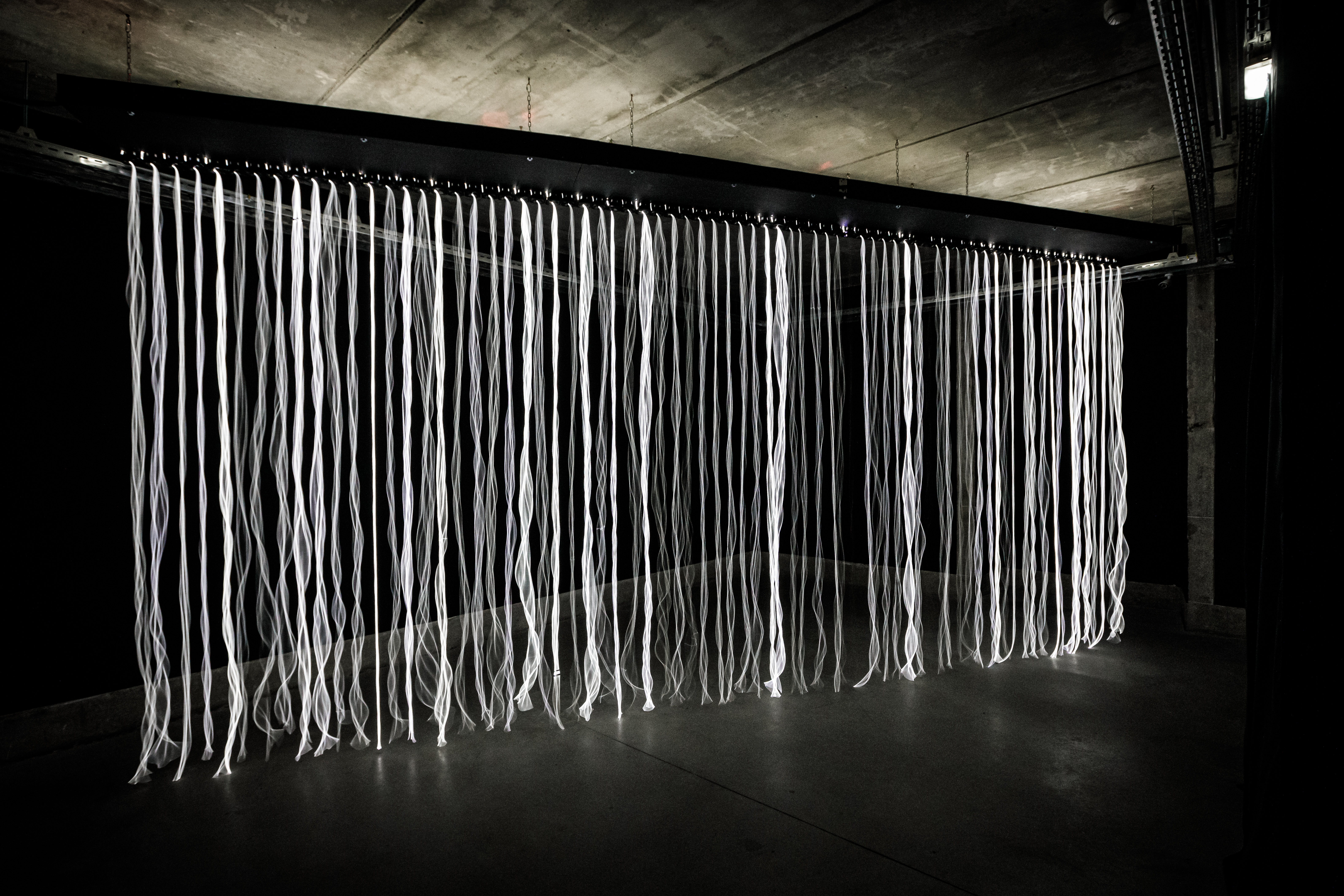
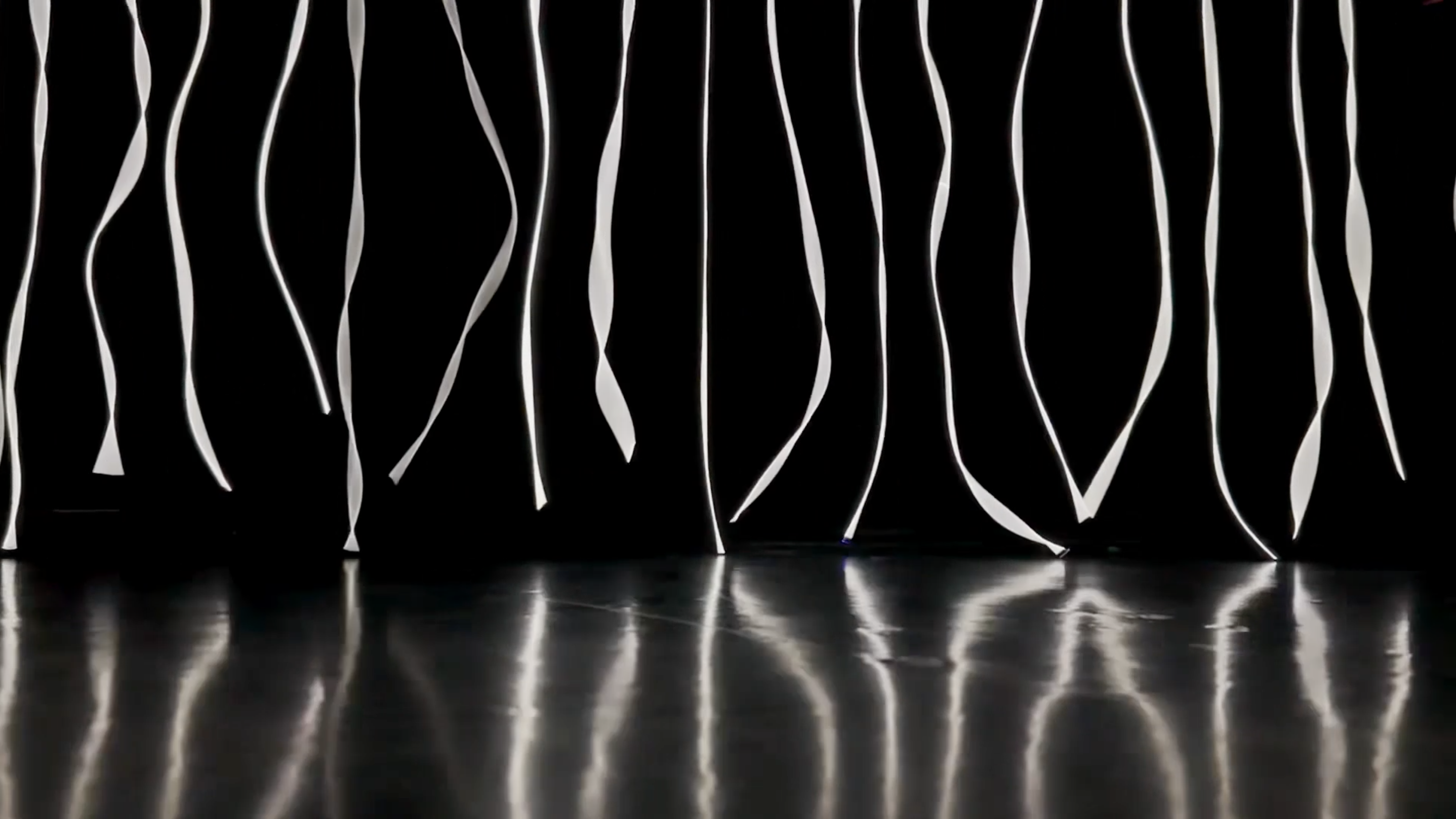
Variable dimensions (max: 10m x 6m x 0,3m). 128 channel sound, 128 speaker cones, 128 light- diffusing optic fiber, 128 lasers, 64 amplifiers, 16 audio interfaces, 3D printed modules, 2 custom PWM-DMX boards, wood, custom software.
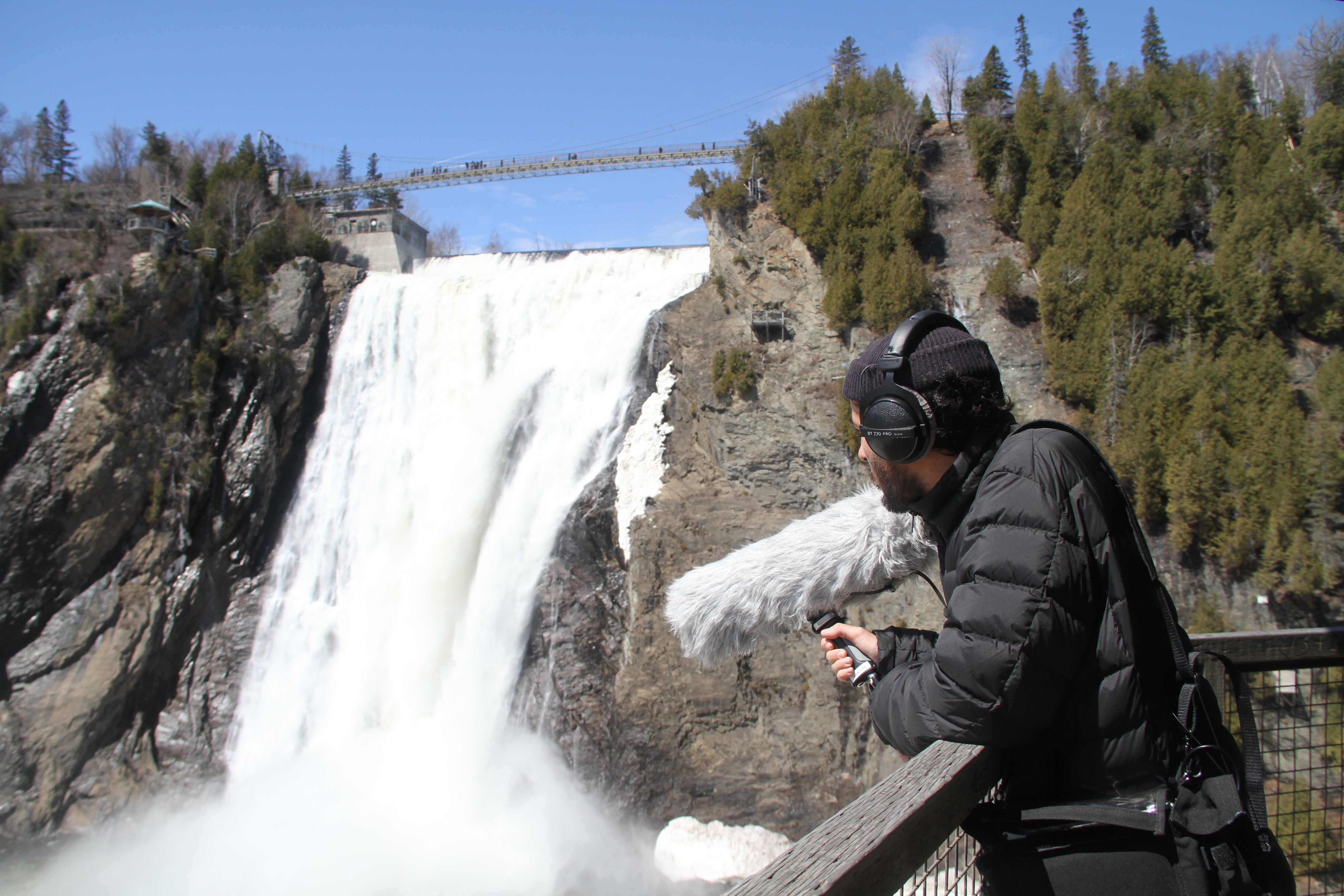
Waterfalls emit infrasonic frequencies that travel across vast distances. Imperceptible to human hearing, these signals guide certain migrating birds during their journeys, serving as an invisible compass. At the same time, growing sources of anthropogenic infrasound, from wind turbines to aviation, alter these acoustic landscapes and disrupt the orientation patterns many species rely on to navigate the world.
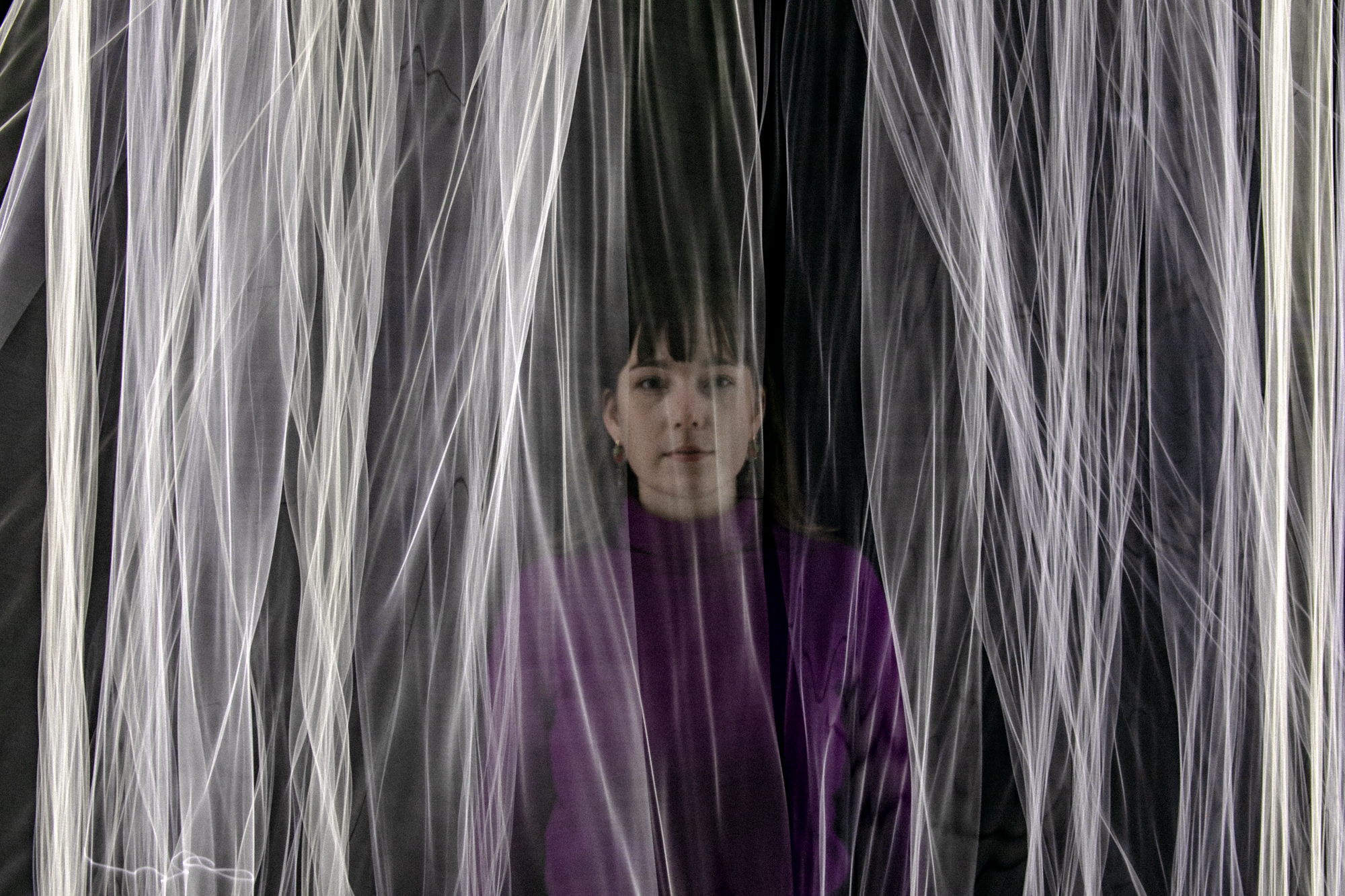
Vilanova captured the infrasound emitted by the Iguazú Falls in Brazil and Argentina, the Niagara and Montmorency Falls in the US and Canada,. In Cascade, a series of speakers unable to reproduce such frequencies transduce their vibrations into a suspended field of fibre-optic strands. The signals travel downward; the sound waves appear to ‘fall’ through shifting light. As the fibres quiver and tremble, visitors are invited to move through this suspended environment, to touch and sense how these aquatic frequencies take form on the skin.
Cascade proposes an expanded, embodied form of listening: an invitation to attune to these fragile sonic ecologies and attend to their preservation.
Credits:
Idea, Production, Construction: Marc Vilanova
3D Design: Javi Albo, Rodrigo Waihiwe
Technical Design & Fabrication: Javi Albo
Software: Alfredo Ardia
Custom Hardware and Firmware: Wesley Lee
3D Printing: Nuno Oliveira
Text: Ana Prendes
Installation Support: Johanna Palmeyro, Clarisa Esevich, Márcio Ferreira, Tiago Rosendo, Guillaume Côté, Myriam Lambert, Triska Sicuranzo, Matias Tolchinsky, Elsa Guerra, Alba Medinyà, Neus Masdeu, Júlia Faura, Mercè Lledós, Lisandro Marquez
Support: EMAP, Creative Europe, Avatar Center, Institut Ramon Llull, OSIC, Konvent Puntzero
Photos: Eloise Coomber, Adriano Ferreira, Charline ClavierThis work was realized in part within the framework of the European Media Art Platform (EMAP) residency program at Gnration with support of the Creative Europe Culture Programme of the European Union, Avatar Center, and the Institut Ramon Llull.
Available for booking


Fremor. 2026
Sound/Light Installation
Fremor listens to what passes through the building structure: wind striking the glass, the vibrations of the underground infrastructures, the urban traffic and people movements of its surroundings. Geophones have registered these persistent, low-frequency waves as they travel through the building, and Fremor transforms them into a sustained movement, in a respiratory rhythm.
Installed on the façade of the National Theatre of Catalunya, a series of twelve-metre long luminous tubes stretch diagonally, taut as strings pulled across the space. Against the building, each tube reads first as a static line of light. Until they move in response to the real patterns of structural vibration, in a gesture that is minimal and continuous. And around them, a soundscape lets these tremors be heard, and sensed, in the open air.
Fremor evokes a silent trembling. The installation unfolds an ecology of tensions: the subsoil as a sensitive surface, architecture as a living body, the inaudible as a trace suggesting that what sustains us may no longer be apparent stability, but tremor itself.
Available for booking
© 2022 Marc Vilanova